

preparing for a donor recognition project
start with what you know.
You don’t need to have every answer before the first conversation.
A little preparation can help your team clarify priorities, gather the right information, and make the initial meeting more productive. These are the key areas we’ll explore together as we begin planning your donor recognition project.
01 /
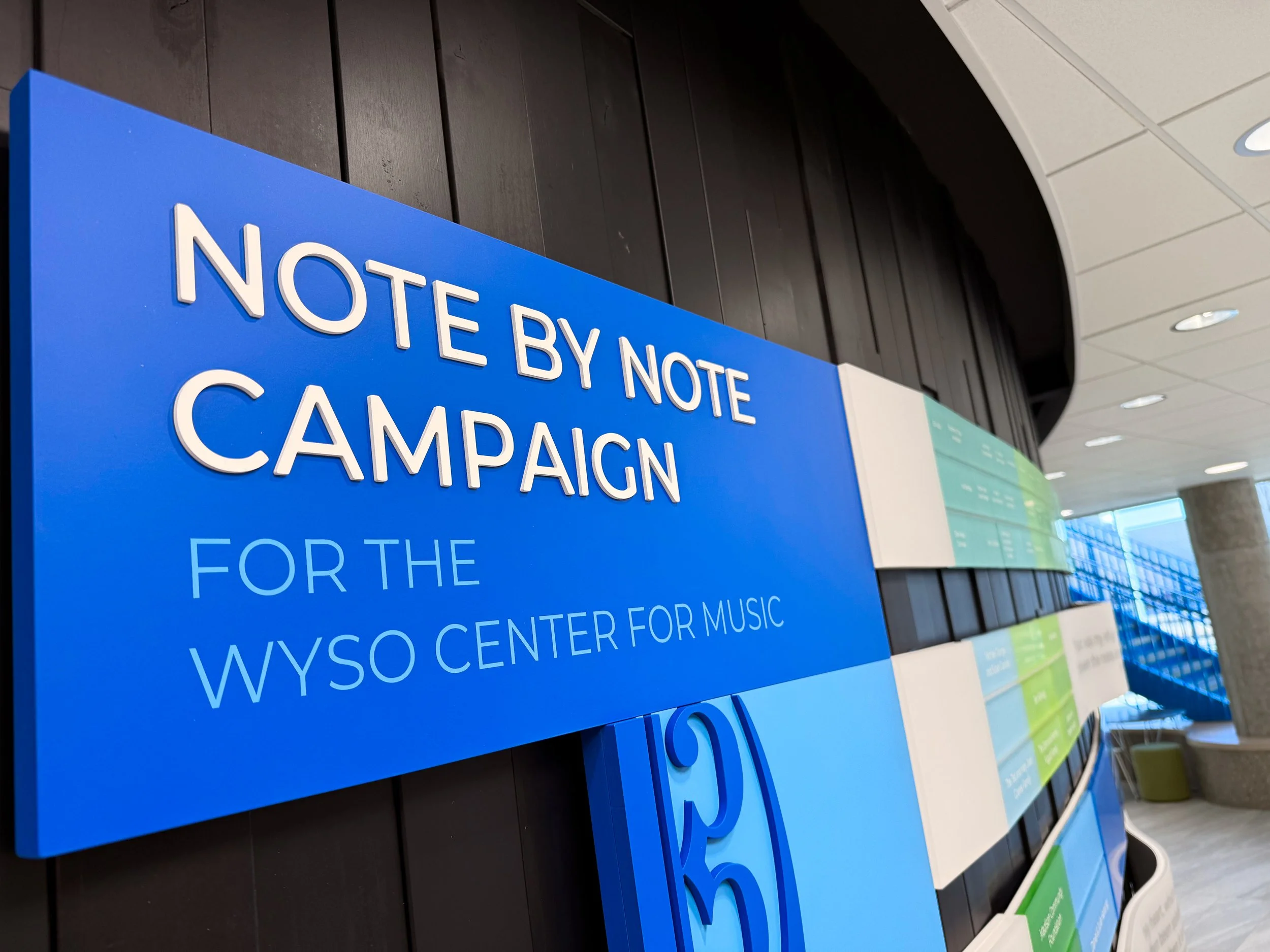
CAMPAIGN
Understand what you’re recognizing.
Your campaign provides the foundation for the donor recognition project. Understanding who is being recognized, how giving levels are structured, and whether the campaign will continue to grow helps shape the system from the beginning.
Think about:
What is the purpose of the campaign?
What are the fundraising goals?
Approximately how many donors will be recognized?
Are there giving levels or categories?
Is the campaign open or closed?
Will new names need to be added over time?
Does the campaign have its own branding, messaging, or theme?
02 /
space
Understand where it needs to live.
The location of a donor recognition display affects its scale, visibility, materials, lighting, mounting, and installation.
Think about:
Where will the recognition be located?
How much space is available?
How will people approach and experience it?
Are there architectural features we need to work with?
Is the space new construction or existing?
Will lighting be needed?
Does the recognition need to serve another purpose, such as storytelling, history, wayfinding, or mission communication?
Are architects, interior designers, contractors, or facilities teams already involved?

03 /
design
Think about how it should feel.
You do not need to arrive with an idea for a donor wall design. Early conversations are about understanding what should feel appropriate for your organization, audience, architecture, and campaign.
Think about:
Are there existing brand standards, colors, fonts, or visual elements?
Are there materials or finishes you’re drawn to?
Should donor names appear individually or in grouped lists?
Should giving levels look different from one another?
Do you want the recognition to feel architectural, graphic, sculptural, digital, or some combination?
Are there examples you like—or definitely don’t like?
Could lighting, dimensionality, artwork, or storytelling become part of the experience?
Think about:
How frequently will donor information change?
Who will manage future updates?
Will the system need to accommodate new names, campaigns, or giving levels?
How important is it for individual elements to be replaceable?
What does long-term maintenance look like for your organization?
04 /
growth + updates
Plan beyond Day one.
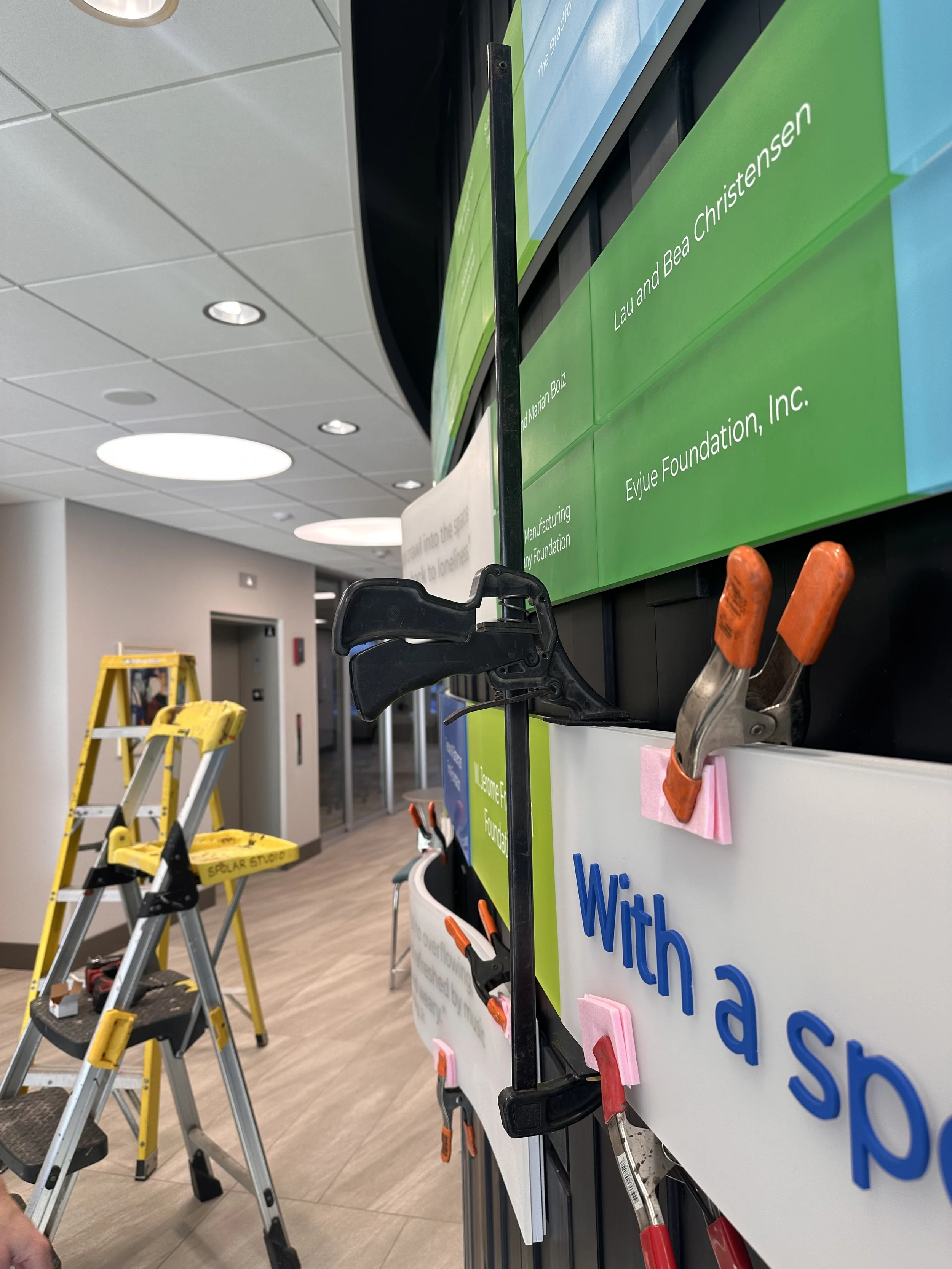
Donor recognition is rarely static. New names get added, campaigns grow, and organizations change over time. By thinking about updates, maintenance, and future expansion early, we can create a system that stays flexible, organized, and visually consistent as it evolves.

05 /
budget + timeline
Define the practical framework.
Budget and schedule help determine which materials, fabrication methods, system types, and installation approaches are appropriate for the project.
Think about:
Is there an established project budget or budget range?
Is there a campaign or construction deadline?
When does the recognition need to be installed?
When will final donor names and content be available?
Are there other trades or construction schedules we need to coordinate with?g
You do not need a fully defined budget before contacting us. Understanding the financial parameters early helps us develop concepts that are appropriate for the project from the beginning.

DONOR RECOGNITION QUESTIONNAIRE
Prepare for the conversation.
Our questionnaire helps your team start thinking through the questions we’ll discuss during the initial meeting—including campaign structure, location, design goals, budget, and timeline.

DONOR RECOGNITION PLANNING GUIDE
Not sure where to begin?
Our downloadable planning guide walks through the major decisions involved in donor recognition and can help your team organize priorities before starting a project.